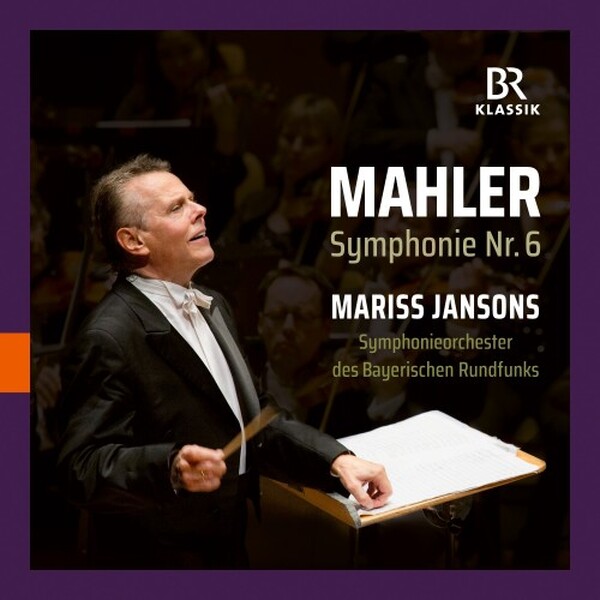
Mahler - Symphony no.6
£14.73
In stock - available for despatch within 1 working day
Despatch Information
This despatch estimate is based on information from both our own stock and the UK supplier's stock.
If ordering multiple items, we will aim to send everything together so the longest despatch estimate will apply to the complete order.
If you would rather receive certain items more quickly, please place them on a separate order.
If any unexpected delays occur, we will keep you informed of progress via email and not allow other items on the order to be held up.
If you would prefer to receive everything together regardless of any delay, please let us know via email.
Pre-orders will be despatched as close as possible to the release date.
Label: BR Klassik
Cat No: 900195
Format: CD
Number of Discs: 1
Genre: Orchestral
Release Date: 20th March 2026
Contents
Artists
Symphonieorchester des Bayerischen RundfunksConductor
Mariss JansonsWorks
Symphony no.6 in A minorArtists
Symphonieorchester des Bayerischen RundfunksConductor
Mariss JansonsAbout
Mahler composed his Sixth Symphony during the summers of 1903 and 1904 at his “composer's cottage” in Maiernigg, near Klagenfurt. At the Vienna performance in 1907 (the third under his baton), he called it the “Tragic Symphony” – a nickname that soon became the stuff of legend. In particular, the darkness and devastating hopelessness of the finale – written at a time when he was at the high point of his life, both professionally and personally – are puzzling. Even his wife Alma could not quite explain the contradiction. As always, it was in and through music that Mahler came to terms with his experiences, exploring themes such as farewell, the meaning of existence, death, redemption, the afterlife, and love.
More than other Mahler works, the Sixth Symphony is committed to “classical” symphonic form: it is in four movements and has no vocal parts. Despite all the liberties it takes, the opening movement follows sonata form. The Andante draws on the rondo form, as do the Scherzo and the Finale. The march, which sets the tone from the very first note of the first movement, plays a major role. Very unusually, even the Scherzo has march-like features and seems like a parodistic paraphrase of the opening, with a change of perspective.
Live recording: Munich, Philharmonie im Gasteig, 4–6 May 2011
Error on this page? Let us know here
Need more information on this product? Click here