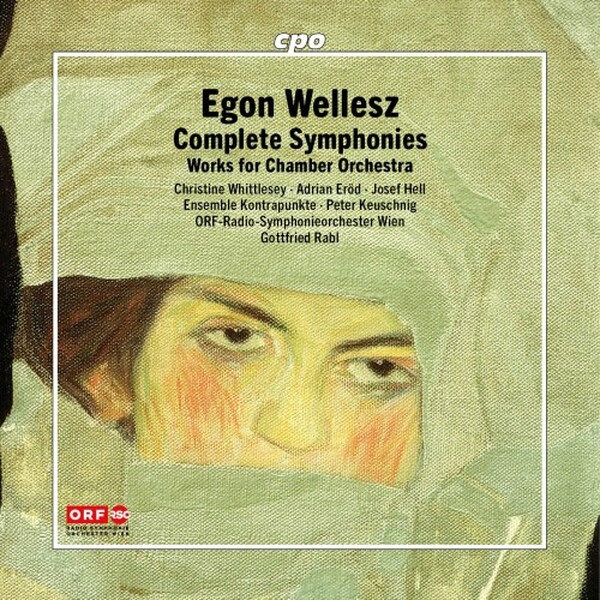
Wellesz: Complete Symphonies, Works for Chamber Orchestra
£42.70
In stock - available for despatch within 1 working day
Despatch Information
This despatch estimate is based on information from both our own stock and the UK supplier's stock.
If ordering multiple items, we will aim to send everything together so the longest despatch estimate will apply to the complete order.
If you would rather receive certain items more quickly, please place them on a separate order.
If any unexpected delays occur, we will keep you informed of progress via email and not allow other items on the order to be held up.
If you would prefer to receive everything together regardless of any delay, please let us know via email.
Pre-orders will be despatched as close as possible to the release date.
Label: CPO
Cat No: 5557392
Format: CD
Number of Discs: 5
Release Date: 5th June 2026
Contents
Works
Movement for chamber orchestraOde an die Musik, op.92
Persisches Ballett, op.30
Sommernacht
Songs of Return (4), op.85
Suite for violin and chamber orchestra, op.38
Symphonies 1-9 (complete)
Symphonischer Epilog, op.108
Artists
Christine Whittlesey (soprano)Adrian Erod (baritone)
Josef Hell (violin)
Ensemble Kontrapunkte (ensemble)
ORF-Radio-Symphonieorchester Wien (orchestra)
Conductors
Peter KeuschnigGottfried Rabl
Works
Movement for chamber orchestraOde an die Musik, op.92
Persisches Ballett, op.30
Sommernacht
Songs of Return (4), op.85
Suite for violin and chamber orchestra, op.38
Symphonies 1-9 (complete)
Symphonischer Epilog, op.108
Artists
Christine Whittlesey (soprano)Adrian Erod (baritone)
Josef Hell (violin)
Ensemble Kontrapunkte (ensemble)
ORF-Radio-Symphonieorchester Wien (orchestra)
Conductors
Peter KeuschnigGottfried Rabl
About
Error on this page? Let us know here
Need more information on this product? Click here